Current Educational Issues in South Africa: Challenges, Causes and Possible Solutions
While there have been significant improvements in the education system since the dawn of democracy, access to education is still a major problem for many South Africans. The current educational issues in South Africa are characterized by a number of challenges, causes and possible solutions to the problems facing the education system in South Africa today.
Are all learners receiving quality education in South Africa? This is the major question of our time in relation to education.
Major educational challenges facing South Africa today include: Low Literacy and Numeracy Levels; Unequal Access to Quality Education; Insufficient School Infrastructure; Overcrowded Classrooms; Teacher Shortages; High Workload for Educators; Costly Education for Families; Gap Between Matric Pass Rates and Actual Learning; Limited Access to Digital Learning and Technology; Language Barriers in the Classroom; School Safety; Bullying and Learner Well-Being; Inequality in Early Childhood Development Opportunities; High Dropout Rates Among Youth; and High Youth Unemployment.
Despite having achieved an impressive 88% Matric Pass Rate for the Class of 2025 (in January 2026), many people will believe that every student is getting a good education and has what he/she needs to go on to higher education or work.
The purpose of this article is to explore the current educational issues in South Africa, why they are important and what can be done to resolve them.
I will attempt to outline some of the major challenges and practical solutions to improve the education system in the country.
Poor Literacy and Numeracy Levels
One of the key educational issues in South Africa is the poor literacy and numeracy levels of many learners.
The fundamental skills required for the majority of the subjects in the curriculum are literacy and numeracy. A learner struggling to read and understand text in Grade 4 will likely struggle to solve word problems in Mathematics, to read written instructions for practical activities in Natural Sciences and to write exam answers in the higher grades.
In the 2024/2025 annual report of the Department of Basic Education it was found that almost 8 out of 10 South African children cannot read for meaning by the time they reach the end of Grade 4. This is a very serious matter as the ability to read with understanding is crucial for academic success.
The poor reading levels are caused by a number of factors, including the lack of reading materials in many schools and the poor state of many school libraries. There are also many children from disadvantaged backgrounds who do not have many books at home and have limited opportunities to read outside of school.
Language is another factor that can affect learners’ academic progress. South Africa has 12 official languages including South African Sign Language. Learners in the early grades are taught in the language spoken in the home but by the time they reach the higher grades they are expected to learn in English.
For many learners, learning to read and write in a new language while at the same time learning new academic concepts is very difficult. This is even more the case when they have not acquired adequate literacy in their home language.
What can be done?
Focus in the early grades on reading and numeracy. This means that there must be age-appropriate books available, the teacher must be supported in his/her teaching and learners who are struggling must be identified and supported before they fall too far behind.
Parents/caregivers have an essential part to play during the first few years of a child’s life; they read to children, tell them stories in their native tongue, and participate in everyday experiences which help children develop numeracy skills (counting), and solve problems. When children go to school, it is critical for students to learn and understand what has been taught at each grade level as opposed to just moving up through the grades.
Unequal Access to Quality Education
All South Africans have access to education, but there is a big difference between the quality of education available at different schools.
Learners from well-resourced schools have access to modern classrooms, laboratories, libraries, sports facilities, reliable internet access and extra academic support. Learners from less-resourced schools on the other hand can attend school in classrooms with no desks, no sanitation facilities and no adequate school buildings.
Inequalities of this kind are rooted in the country’s past and the policies of the apartheid regime. Although much has been achieved since 1994, the effects of these inequalities are still being felt by many learners.
An additional factor that contributes to inequalities in education is the ability of parents to pay for their children’s education. This can include the cost of private tutoring, of educational technology, of transport to school, of extra lessons and of other activities.
The problem of education not being free is not so much in the fact that the government is cutting tuition fees; rather, it lies in the fact that one position usually does not lead to another. It is also necessary for the government to implement such thing as education programs in various sectors of society in order to have education being truly free.
It does mean that there’s a wide gap between different people’s educational experiences.
Having equal access to education means not only having a free school but also having the necessary resources to not only have a seat in the classroom but also ensure the effective functioning of schools and communities where education takes place.
Infrastructure Deficiencies and Overcrowding in Classrooms.
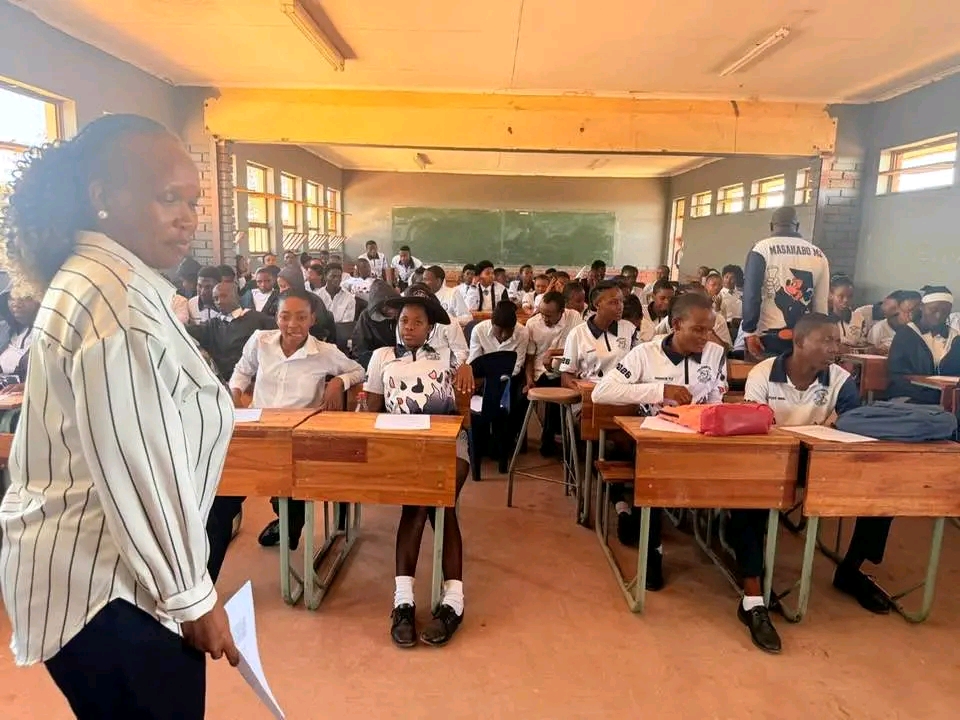
Consider being in a classroom where there are over 50 learners and not enough desks, making it very difficult for the teacher to provide individual attention to the students.
In many parts of South Africa there are overcrowded classrooms and schools with inadequate school infrastructure.
In many parts of South Africa there are schools with inadequate basic facilities, such as damaged school buildings, insufficient number of classrooms, unreliable water supply, poor sanitation facilities, and no electricity. Schools in rural areas are often in a worse state than those in urban areas, and with the rapid growth of urban areas, many schools are struggling to cope with the increasing number of learners.
According to a report by the Portfolio Committee on Basic Education in Parliament in March 2026, an estimated 43,677 additional classrooms are needed to address overcrowding in schools across the country. The report also highlights that there are many inappropriate school buildings and that many schools do not have basic facilities such as laboratories, libraries and computer centres.
These factors can have a direct effect on the learning of learners. For example, overcrowded classrooms can make it difficult for teachers to manage lessons and to mark work of learners, and can mean that learners are not receiving the individual attention that they need.
The physical environment of a school is more than just about how the school looks. It can affect the learning of learners in many ways and can even affect their health and safety.
Some of the possible solutions could be speeding up building schools and maintaining them, improving on project management skills, giving priority to schools that have urgent needs, and ensuring that the available money is used properly for completion of the needed schools.
Furthermore, there should be a clear channel and system for communities to report the infrastructural problems and check for progress.
Teacher Lack and Workload of Educators
Regardless of how good the texts used and how modern the buildings are, nothing can take the place and importance of a well-informed, supported, and motivated teacher.
But in South Africa, teacher shortages and the uneven distribution of qualified educators are still issues.
In many schools there are not enough teachers for subjects such as Mathematics, Physical Sciences, Technology, and other specialized subjects, and even in schools where there are teachers for these subjects, they are often in short supply.
Sometimes the teachers who are available have to teach more than one subject, and sometimes they have to teach subjects that they are not even qualified to teach. In addition, the teachers in many schools have to deal with large classes, and they have to complete a lot of administrative work, which reduces the time that they have for lesson preparation, for marking of learners’ work, and for extra help for learners who are struggling.
In addition, the administrative workload can also reduce the time teachers have for lesson preparation, marking, and providing extra support to learners who need it.
This is not to say that teachers are the only problem in the education system. Many teachers work in very difficult circumstances and do the best that they can with the limited resources that they have.
However, in order for teachers to be effective in the classroom, they need ongoing professional development and support from school management and leadership.
In South Africa we need to improve the training of teachers, to ensure that they are placed in schools where they are needed, and to provide them with the support that they need to teach effectively in the classroom. This could include mentoring of newly qualified teachers.
When teachers are supported, it benefits learners as they can receive consistent and effective instruction.
High Cost of Education for Families
While education is generally free in South Africa, there are many other costs that families have to bear in order to send their children to school.
For parents and caregivers, there are many extra costs for their children in school, such as school uniforms, transport to school, school stationery, school meals, internet access, devices for learning, and other activities outside of school.
It is not only the low-income families that find it difficult to pay for the education of their children. There are many working families who earn above the threshold for free education but who struggle to pay for all the education costs of their children as other costs such as food, rent and transport increase.
The Statistics South Africa report on education expenditure in the country highlights that although the country spends a lot of money on education, many households still cannot afford to send their children to school.
For example, a learner may be absent from school because the school is located far from home and the cost of transport is too high. A learner may not be able to complete digital learning tasks because there is no internet access at home or because the learner only has access to a shared smartphone and is unable to afford data costs.
All of these factors affect the learner’s ability to learn and can negatively impact on their performance in school, but this does not mean that the learner is not capable of learning.
Some of the solutions that are being implemented include the school nutrition programs, no-fee schools, support for families with education costs and making learning materials available through schools and community facilities.
Schools should be clear about the costs of sending a child to school and avoid putting unnecessary financial pressure on families.
Gap Between Matric Pass Rates and Real Learning
Many people use the matric results of learners in South Africa to measure the quality of education in the country. This is because matric is the final year of schooling for learners in South Africa and the results are announced on a national basis.
The Class of 2025 achieved an 88% National Senior Certificate pass rate, according to the South African government’s official matric results announcement .
While this is a great achievement for the Class of 2025, there are many questions that still need to be answered in terms of what learners actually learnt in school, which subjects they studied and whether they are ready for university or for the world of work.
For example, in the 2024/2025 annual report of the Department of Basic Education it was found that performance in Mathematics dropped from a 69% pass rate in 2024 to 64% in 2025. It is even worse when one takes into account that only 34% of matric candidates of 2025 opted for Mathematics and the majority of learners pursued Mathematical literacy.
Someone’s passing matric does not entail that he/she has gained the necessary skills and competences to be engaged in a specific occupation.
The fact of passing Grade 12 should not be equated with readiness for university or work. A graduate can find his/her way into a tertiary education program not being prepared for that academically, and even obtain a qualification without experience and necessary competences required by employers.
In South Africa there is a general matric pass, a diploma pass and a bachelor’s pass. These different passes open up different pathways for further education and training. Therefore, the overall pass rate should not be the only measure of success in education.
In order to measure the progress of learners throughout their school career, a range of indicators can be used. These encompass indicators of literacy and of numeric ability, of achievement in different subjects, of presence in school, and of percentages of students continuing their education and training.
In the end, the emphasis should be placed not only on helping students successfully finish their exams. It should be on preparing them for what’s next.
Limited Access to Digital Learning and Technology
In the modern world, technology plays a very important role in the education of children and young people. Online learning platforms, digital textbooks and videos of lessons are some of the ways in which learners can gain a better understanding of subjects taught in the classroom and explore other subjects as well.
Not all schools in South Africa have the same access to digital learning and technology.
While some schools have computer laboratories, reliable internet access and even teachers who are well-versed in the use of technology for teaching and learning, there are many schools in South Africa which have limited devices for learners, unreliable electricity and even lack of affordable internet access.
For learners at home, the situation is even more complex. A learner with a laptop and internet access can complete research for school projects, attend online lessons and even use different educational applications for learning. A learner with only a shared smartphone and high data costs, on the other hand, will find it very difficult to complete digital learning tasks.
As with many other things, the challenges of remote learning during the COVID-19 pandemic have served to highlight existing digital inequalities in education.
And it is not only learners who are affected by digital inequality. Teachers also need to be trained in the use of technology for teaching and learning.
In South Africa, in order to minimize the digital divide in education, it is essential that better Internet access and availability of necessary learning tools, as well as teacher training in technology utilization be introduced.
Technology adds value to the educational process but cannot substitute the teacher who is able to give guidance, support and respond to students’ questions.
Language Barriers in the Classroom
South Africa is a multilingual country, which is a strength in itself, but it can also present some challenges in the education system.
The majority of young children begin by speaking their native African languages at home. When they reach higher grades, they must study in English – which is not always so easy as most of them have not mastered the language yet.
As a result, this may result in challenges in the education of the students. The students could relate to a certain scientific concept that has been taught to them in African languages such as isiZulu, Sepedi or Xitsonga and yet struggle to respond to questions which are in English.
This is an important difference between knowing content and being able to communicate it effectively as language barriers can hinder smooth learning, students’ participation in class and exam performance.
There were attempts to implement bilingual models in schools in South Africa where children learn in their native languages at the beginning, after which they learn English and may pick up more languages than that.
The problem is that the various schools should have proper materials and trained staff as well as the needed support for effective implementation of the bilingual approach.
While adopting solid literacy skills in the early stages of education, along with bilingual educational practices where possible, is the most appropriate way to assist individuals who experience living in a foreign language or arrive from non-English-speaking countries. The method of implementation of this pedagogical tool is that the educators are able to offer simplifications of complex concepts in a foreign language acceptable to students while continuing to teach them some English vocabulary.
In addition, the family members and caretakers can help the kids by motivating them to read in their native languages and use them in paralinguistic communication.
It is obligatory for schools to provide safe environments for study.
Issues such as bullying, violence, intimidation, discrimination and unsafe school environments can affect learners’ attendance, concentration and well-being. Learners can feel unsafe and threatened by other learners and can even be afraid to attend school.
Outside of the classroom, learners can face a number of challenges including family conflict, poverty, substance abuse in the community and violence.
School performance can suffer for those learners who have difficulties coping with life situations, even if they have a good potential and a strong wish to progress in studies. In this way, it is obvious that mental health and emotional wellbeing are not isolated from the education process but represent its important component.
As a part of the overall security policies, the schools should implement effective anti-bullying programs, which would include professional development of teachers in this respect. There are many professionals that can help individuals receiving education, however, there are many students that do not have access to these services.
Another source of help may come from parents or caregivers of children. The term “safe school” implies safety not only in terms of being free from violence but also in emotional aspect.
Unequal Access to Early Childhood Development
Early Childhood Development (ECD) is the initial phase of formal education and is known to play a vital role in enabling children to develop their skills in the areas of language, social life and intellect.
ECD aids children in undergoing the process of language, social and cognitive development that is essential for a formal education. Quality early education ensures that children progress well enough that they will not have a problem with their education in their early educational years.
Access to affordable and quality ECD services is not equal.
Certain families are lucky to get access to quality early childhood education practices with qualified educators and facilities while some families are forced to rely on informal centers without proper infrastructure and trained staff.
As a result of poor-quality early childhood education, children will arrive at the school environment without the literacy, numeracy, and social skills that teachers expect from children entering kindergarten.
This does not mean that children from less privileged families are destined to fail. What is meant is that they will need additional help in order to be given the same treatment and opportunities as every other child.
The Department of Basic Education has established the provision of accessible quality ECD as an important priority in the 2026 education reform program.
For further information about education expenditure, household barriers and the distribution of resources, readers can consult Statistics South Africa’s reporting on education spending .
For a broader view of infrastructure needs and government oversight, the Parliament of South Africa’s March 2026 school infrastructure statement provides additional context.
These resources can help understand why it’s important to address education challenges throughout the learning journey, starting with early childhood, rather than waiting until learners reach secondary school.
School Drop-out Rates and Youth Unemployment
One of the biggest concerns with education in South Africa is the high number of young people who drop out of school before completing Grade 12 or who continue with their education but do not have a clear path to employment.
Many factors can contribute to a learner dropping out of school. There are generally many reasons. The reasons can be poor school performance, financial problems, responsibilities at home, teenage pregnancy, being bullied, and long distances to school.
Sometimes, pupils who fall behind in their academic careers come to repeat their grades, lose their confidence and finally drop out of school.
The impact of dropping out of school can be far-reaching, even beyond the learner’s education. Without a school-leaving qualification or relevant skills, young people may struggle to access further education, vocational training, or even employment.
At the same time, even if someone completes matric, it doesn’t guarantee a job. In South Africa, the unemployment rate of young people is high, so many of them have difficulty getting a job after completing their studies.
We need to work closely together in schools and colleges and with employers. Career advice should be available before the learners reach matriculation. This can help them understand different occupations, subject requirements and available training opportunities.
Efforts to promote vocational education and technical education ought to be enhanced, because not everyone thinks of attending university. There exist important routes toward employment based on practical qualifications in such areas as electrical, construction and engineering services, hospitability and information technology.
Identifying learners who are likely to drop out from education early, creating educational support programs and allowing for various opportunities for those who failed to complete their education create opportunities for some young people to complete their education.
Education can provide various routes to success rather than impose on individuals the idea that there is only one way.
What Can Be Done to Improve Education in South Africa?
While there are many challenges facing the education system in South Africa, there are also many solutions to these problems. Sustained cooperation between government, schools, teachers, parents, communities, and the private sector is required in order to make any meaningful improvements to the education system.
Some key priorities include;
Concentrate on basic learning: Be sure that lessons on numeracy and reading comprehension take precedence in the lower grades. Regular evaluations must be done in order to discover pupils who might require assistance when it comes to learning
Invest in educational infrastructure: Among other things, schools require basic utilities, infrastructure for learning, and safe classrooms, most of all in underprivileged areas.
Assist educators: Schools must suffice for teachers’ professional development, their job recruitment process, onward to decreasing the administrative obligations of teachers.
Utilization of the internet in education: This can be made possible if there is a speedy and reliable internet connection, effective devices in place and teachers who understand how to help children effectively use technology in their studies.
Relate education with jobs: That is, improve vocational training, career advice as well as job placement and cooperation between educational institutions and the world of business.
Assess achievements not only by passing rates: It is necessary to check if the students are literate, mathematically skilled, and whether they can move on to the next stage of education and work.
There should also be a role for parents and communities in ensuring school attendance, encouraging reading at home and taking part in school governance and expressing concerns about the obstacles to learning.
Nonetheless, it’s unrealistic to expect families to resolve the main problems concerning education and educational system in South Africa. The government is responsible for ensuring that the educational policies, budgets and programs in place result in real improvements in schools across the country.
Conclusion: Building a Better Education System for All South Africans
The education system of South Africa has evolved over time, but numerous disparities still exist that need to be resolved so that the highest standard of education can be given to all learners in the country.
There are numerous challenges that the education system in South Africa is still experiencing like poor literacy levels in junior grades, lack of classroom space, poor school infrastructure, shortage of teachers, under pressure from families financially and unequal access to technology.
All of these issues are interconnected. For example, a learner who attends an under-resourced early learning center will struggle to read in primary school, fall behind in secondary school and have limited options after matric.
We need a long-term commitment to providing quality education at all levels, from early childhood development to vocational training and higher education.
However, behind every statistic there is a learner with potential, interests and the ability to contribute to society in a meaningful way.
The education system in South Africa will be stronger when a child’s chances of success are not determined by where they live or the income of their parents, but by their effort, potential and the quality of education they receive.
